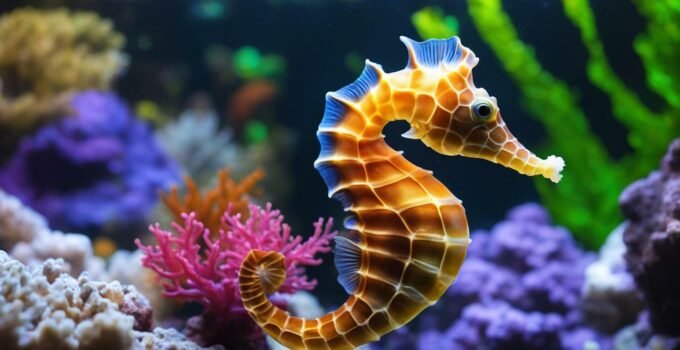
Welcome to our expert guide on caring for seahorses as pets. Seahorses are unique and fascinating creatures that require specialized care to thrive in a home aquarium. In this comprehensive guide, we will walk you through the essential aspects of seahorse pet care, from creating the ideal habitat to ensuring their health and well-being. Whether you’re a seasoned aquarist or a first-time seahorse owner, this guide will provide you with the knowledge and guidance you need to provide the best care for your seahorses.
Key Takeaways
- Proper care for seahorses is crucial due to their unique needs and vulnerabilities.
- The ideal seahorse habitat requires a specific tank setup, including minimal water flow and oversized filtration systems.
- Choosing the right seahorse species is important as they have different sizes, temperaments, and care requirements.
- Maintaining stable water parameters and proper filtration is essential for seahorse health.
- Feeding seahorses a balanced diet that includes live foods like copepods and brine shrimp is crucial.
Creating the Ideal Seahorse Habitat
Creating the ideal seahorse habitat is crucial for their well-being and requires careful consideration of tank setup, habitat design, decor, and lighting. Seahorses have unique needs that differ from other fish, making it important to create a specialized environment that mimics their natural habitat.
When setting up your seahorse tank, it’s important to prioritize minimal water flow. Unlike many fish species, seahorses are not strong swimmers and can become stressed or exhausted in tanks with strong currents. To ensure their comfort, invest in a tank with low-flow or adjustable flow features, and consider using oversized filtration systems to maintain excellent water quality.
| Tip: | Provide good hitching posts |
|---|---|
| Seahorses need places to anchor themselves, so incorporating live or artificial plants, seaweeds, or corals into the tank can provide them with “hitching posts” where they can rest or cling onto. Just make sure to choose non-toxic options that won’t harm your seahorses. |
When designing the decor for your seahorse tank, opt for a natural and gentle environment. Avoid sharp or abrasive materials that could harm your seahorses, and instead choose soft substrates, such as sand or fine gravel. Additionally, ensure that there are no exposed pipes or equipment that could cause injury to your delicate seahorses.
Lighting is another essential factor to consider in your seahorse habitat. Seahorses thrive under subdued lighting conditions, so aim for a combination of low to moderate lighting levels and provide shaded areas within the tank. This will help to mimic their natural habitat and reduce stress levels.
Tank Setup Checklist:
- Choose a tank with low-flow or adjustable flow features to minimize water movement
- Invest in oversized filtration systems for optimal water quality
- Incorporate live or artificial plants, seaweeds, or corals as hitching posts
- Use soft substrates to prevent harm to seahorses
- Avoid sharp or abrasive materials in tank decor
- Provide subdued lighting levels with shaded areas in the tank
By creating the ideal seahorse habitat with proper tank setup, habitat design, decor, and lighting, you can ensure the well-being and happiness of your seahorses as they thrive in their specialized environment.
Choosing the Right Seahorse Species
When choosing seahorses as pets, it’s important to select the right species that suits your tank setup and matches your level of experience. Seahorses require specialized care and have unique needs, so it’s crucial to choose a species that you can confidently provide for.
There are several seahorse species available for keeping as pets, each with its own characteristics and care requirements. Here are some popular species to consider:
- Hippocampus erectus: Also known as the Lined Seahorse, this species is one of the most common choices for beginners. They are relatively hardy and adaptable, making them a good option for first-time seahorse keepers.
- Hippocampus reidi: The Longsnout Seahorse is another popular choice, known for its vibrant colors and slender snout. They require slightly more advanced care than H. erectus but can thrive with proper husbandry.
- Hippocampus zosterae: Commonly known as the Dwarf Seahorse, this species is the smallest seahorse available for keeping as pets. They have very specific care requirements and are best suited for experienced aquarists.
Before making a decision, it’s essential to research each species thoroughly to ensure you can meet their specific needs. Consider factors such as tank size, water parameters, and compatibility with other tankmates. It’s always a good idea to consult with experienced seahorse keepers or reputable aquatic stores for guidance.
| Species | Size | Temperament |
|---|---|---|
| H. erectus | 4-6 inches | Peaceful |
| H. reidi | 6-8 inches | Peaceful |
| H. zosterae | 1-2 inches | Feisty |
Remember, seahorses are delicate creatures, and providing them with the appropriate environment and care is crucial for their well-being. By choosing the right species and dedicating yourself to their specialized needs, you can create a rewarding and fulfilling experience as a seahorse owner.
Water Parameters and Filtration
Maintaining optimal water parameters and employing an efficient filtration system are crucial for the health and well-being of your seahorses. Seahorses require specialized care, and their aquarium should be set up as a “species tank” rather than a reef tank. One of the key considerations is ensuring minimal water flow, as seahorses are not strong swimmers and can become stressed in strong currents. The ideal water flow rate for a seahorse tank should be between 1-2 times the volume of the tank per hour.
In addition to minimal water flow, oversized filtration systems are necessary to maintain the water quality in a seahorse tank. Seahorses produce a significant amount of waste and are sensitive to poor water conditions. A combination of mechanical, chemical, and biological filtration methods is recommended. Mechanical filtration removes large debris, while chemical filtration helps to remove impurities and maintain water clarity. Biological filtration, which relies on beneficial bacteria, is essential for breaking down harmful substances such as ammonia and nitrites.
To monitor and maintain stable water parameters, regular testing is necessary. Seahorses thrive in water with a temperature range of 72-78°F (22-25.5°C) and a salinity level of 1.022-1.026. The pH level should be kept within a range of 7.8-8.5, and ammonia levels should always be kept at zero. Ensuring stable water parameters will help prevent stress and disease in your seahorses.
| Water Parameter | Ideal Range |
|---|---|
| Temperature | 72-78°F (22-25.5°C) |
| Salinity | 1.022-1.026 |
| pH | 7.8-8.5 |
| Ammonia | Zero |
Quarantine for New Seahorses
When introducing new seahorses to your aquarium, it is essential to quarantine them before adding them to the main tank. Quarantine helps prevent the introduction of pathogens and parasites that could harm your existing seahorses. During the quarantine period, closely observe the new seahorses for any signs of illness or stress. It is recommended to keep them in a separate tank with the same water parameters and filtration system as the main tank, but without any other tankmates.
Quarantine should last for a minimum of 4-6 weeks to ensure that the new seahorses are healthy and disease-free. During this time, provide them with quality food and monitor their appetite and behavior. If any signs of illness or stress are detected, consult with a marine veterinarian or an experienced seahorse keeper for appropriate treatment options.
By maintaining optimal water parameters, employing an efficient filtration system, and implementing a proper quarantine process, you can provide a healthy and stable environment for your seahorses. These measures will help ensure the well-being and longevity of your beautiful seahorse pets.
Seahorse Feeding and Diet
Feeding seahorses can be a challenge due to their specific dietary requirements, which typically include live foods like copepods and brine shrimp. These small organisms provide the necessary nutrition for seahorses and mimic their natural diet in the wild. However, sourcing live foods can be time-consuming and expensive, making it important to establish a reliable supply.
To ensure your seahorses receive a balanced diet, it is recommended to set up a culture of copepods and brine shrimp in your home aquarium. These organisms can be easily cultivated using specialized kits or purchased from reputable suppliers. The live foods can then be introduced into the seahorse tank, providing a constant source of nutrition.
Additionally, it is advisable to supplement their diet with frozen or freeze-dried substitutes. These alternatives can be purchased at pet stores and offer convenience while still providing essential nutrients. However, it is important to note that frozen or freeze-dried foods may not be as enticing to seahorses as live prey, so it may take some time for them to adjust.
In order to monitor their feeding habits and ensure they are consuming an adequate amount of food, it is recommended to feed seahorses multiple times a day. This mimics their natural feeding behavior in the wild where they constantly graze on small prey. However, be careful not to overfeed, as this can lead to water quality issues. Regular observation and adjustment of feeding amounts will help maintain a healthy balance.
Feeding Tips for Seahorses:
- Establish a culture of copepods and brine shrimp for a reliable food source.
- Supplement the diet with frozen or freeze-dried foods as necessary.
- Feed seahorses multiple times a day to mimic their natural feeding behavior.
- Monitor feeding amounts and adjust as needed to prevent overfeeding.
Sample Feeding Schedule:
| Time | Food |
|---|---|
| Morning | Live copepods |
| Afternoon | Live brine shrimp |
| Evening | Frozen or freeze-dried substitute |
By following these feeding guidelines and providing your seahorses with a well-balanced diet, you can help ensure their health and longevity. Remember, the patience and effort you invest in their feeding habits will be rewarded with the beauty and grace of these enchanting creatures.
Captive-Bred Seahorses vs. Wild-Caught Seahorses
Opting for captive-bred seahorses is recommended as they offer greater chances of success and minimize the risks associated with wild-caught specimens. While both captive-bred and wild-caught seahorses can be kept as pets, there are important factors to consider when making a choice.
Captive-bred seahorses are bred in controlled environments, ensuring that they are free from pathogens and parasites commonly found in the wild. This reduces the risk of introducing diseases to your aquarium and maintains the overall health of the seahorses. Additionally, captive-bred seahorses are accustomed to aquarium conditions, making them more adaptable and easier to care for.
On the other hand, wild-caught seahorses are more challenging to care for. They are often affected by the stress of capture and transportation, which can lead to feeding difficulties and a higher chance of disease. Their specific dietary requirements can be harder to meet, as they are accustomed to feeding on live foods found in their natural habitat.
| Captive-Bred Seahorses | Wild-Caught Seahorses |
|---|---|
| Higher chances of success | Greater risk of disease and stress |
| Accustomed to aquarium conditions | Adapting to aquarium conditions can be challenging |
| Bred in controlled environments | Exposed to pathogens and parasites from the wild |
| Easier to care for | Feeding difficulties and specific dietary requirements |
If you are considering keeping seahorses as pets, it is crucial to prioritize their well-being and minimize potential risks. By choosing captive-bred seahorses, you can provide a healthier and more stable environment, increasing the chances of successful care and longevity for these fascinating creatures.
Maintaining Seahorse Health
Ensuring the health of your seahorses is essential, and this section will provide valuable tips on observation, quarantine, and detecting and addressing common health issues. Seahorses are delicate creatures that require special care, so it’s important to be proactive in maintaining their well-being.
Observation is key to identifying any signs of illness or stress in your seahorses. Take the time to closely observe their behavior and appearance on a regular basis. Look for any changes in appetite, activity level, or physical appearance. Keep a record of these observations to track any patterns or changes over time.
Quarantine Procedures
Quarantining new seahorses is crucial to prevent the introduction of diseases into your aquarium. When bringing in new seahorses, it’s recommended to keep them in a separate tank for a period of time. This allows you to closely monitor their health before introducing them to the main aquarium. It also helps to prevent the spread of any potential pathogens to other tank inhabitants.
| Common Seahorse Health Issues | |
|---|---|
| Bloat | Caused by overeating or poor water quality, seahorses may become bloated, making it difficult for them to eat or swim properly. |
| Fungal Infections | Fungal infections can occur due to poor water quality or injuries. Look for white, cotton-like growths on your seahorses’ bodies and fins. |
| Respiratory Issues | Seahorses can develop respiratory issues, such as rapid breathing or gasping for air, due to stress or poor water conditions. |
By being aware of these common health issues, you can take prompt action if you notice any symptoms in your seahorses. Consult with a veterinarian who specializes in exotic aquatic species to ensure accurate diagnoses and appropriate treatment options.
Seahorse Breeding and Reproduction
Breeding seahorses can be a rewarding experience, and this section will provide an overview of the mating behaviors and considerations for successful reproduction. Seahorses are known for their unique reproductive process, where the male carries the eggs and gives birth to live offspring.
During courtship, seahorses engage in an elaborate dance, where they change colors, intertwine their tails, and perform intricate movements. This dance is crucial for bonding and ensuring the success of mating. Once the pair has bonded, the female seahorse deposits her eggs into the male’s brood pouch, where fertilization occurs.
The male then carries the eggs in his brood pouch for a period of 14 to 28 days, providing them with nutrients and oxygen. It’s essential to provide a stress-free environment during this time to ensure the successful development of the embryos. Maintaining stable water conditions and providing a diet rich in protein are crucial for the male’s health and the survival of the offspring.
Mating Considerations:
- Pairing: Seahorses should be carefully paired, considering their size, temperament, and compatibility. It’s best to choose healthy individuals from captive-bred populations to ensure better success rates.
- Adequate Space: Seahorses require ample space in the aquarium to engage in courtship behaviors. Ensure that the tank is large enough to accommodate both the seahorses and potential offspring.
- Nutrition: Providing a varied and nutrient-rich diet is crucial for the overall health of the seahorses and successful reproduction. Feeding a combination of live foods and high-quality frozen or powdered foods is recommended.
- Water Quality: Maintaining clean water with stable parameters is essential for the health and well-being of seahorses, especially during the breeding process. Regular water changes and proper filtration are necessary.
- Separate Breeding Tank: Setting up a separate breeding tank allows for better control over breeding conditions and reduces the risk of stress or predation from tankmates.
By understanding the mating behaviors and providing the necessary care, you can increase the chances of successful seahorse breeding. However, it’s important to note that seahorse breeding requires a significant commitment of time, effort, and resources. It is recommended to consult with experienced breeders or marine specialists for guidance and support throughout the process.
| Considerations for Successful Seahorse Breeding | |
|---|---|
| Pairing | Choose compatible seahorses from captive-bred populations |
| Adequate Space | Provide a large enough tank for courtship and potential offspring |
| Nutrition | Offer a varied diet of live foods and high-quality frozen or powdered foods |
| Water Quality | Maintain clean water with stable parameters through regular changes and proper filtration |
| Separate Breeding Tank | Set up a dedicated breeding tank for better control and reduced stress |
Tankmates and Compatibility
Choosing the right tankmates is crucial for the well-being of your seahorses, and this section will provide guidance on suitable companions and the potential risks of introducing incompatible fish. Seahorses are delicate creatures that require specialized care and attention, and their tankmates should be carefully selected to ensure a harmonious environment.
Seahorses are best kept in “species tanks” rather than reef tanks, as they have unique needs that may not be compatible with other fish species. It is important to note that seahorses should only be kept with other seahorses or pipefish, as other fish can outcompete them for food and cause stress. Seahorses feed by using their long snouts to suck in food, so faster-swimming and aggressive fish may prevent them from getting their fair share.
When introducing new tankmates, it is essential to consider the compatibility of species in terms of size, temperament, and feeding habits. Larger fish may view seahorses as prey, while small, fast-moving fish may harass them. Additionally, some fish may have different dietary requirements and compete with seahorses for the same food sources. Therefore, it is crucial to choose tankmates that are peaceful, non-aggressive, and have similar care requirements to ensure a stress-free environment.
Table: Suitable Tankmates for Seahorses
| Tankmate | Compatibility | Notes |
|---|---|---|
| Other seahorses | High | Seahorses can form social bonds and thrive in the presence of their own species. |
| Pipefish | High | Pipefish have similar care requirements and can coexist peacefully with seahorses. |
| Gobies | Medium | Some gobies can make suitable tankmates, but careful observation is necessary to ensure compatibility. |
| Snails and hermit crabs | High | These bottom-dwelling organisms are generally harmless and can help maintain a clean aquarium. |
By selecting suitable tankmates and providing a stress-free environment, you can ensure the well-being and happiness of your seahorses. Remember to closely monitor the behavior and feeding patterns of all tank inhabitants to detect any signs of aggression or incompatibility. With proper care and attention, your seahorses will thrive in their aqua-home.
Seahorse Growth and Space Requirements
Providing enough space for seahorses to grow is vital, and this section will cover the tank size and husbandry practices needed to support their healthy development. Seahorses require specific conditions to thrive, as they are unique aquatic creatures with delicate needs. When setting up their habitat, it’s important to create an environment that mimics their natural surroundings.
For a single pair of seahorses, a tank size of at least 30 gallons is recommended. However, larger tanks of 55 gallons or more are ideal, as they provide more swimming space and allow for better water quality control. Seahorses are slow swimmers and need ample room to move and explore. Additionally, a larger tank offers more room for essential equipment, such as oversized filtration systems and protein skimmers, which are necessary to maintain optimal water conditions.
In terms of husbandry, it’s crucial to ensure a stable and clean environment for seahorses. Regular water changes, keeping temperature between 72-78°F, and maintaining salinity levels of 1.020-1.025 are essential for their overall health. Seahorses are sensitive to changes in water parameters, so routine monitoring is necessary to catch any fluctuations early on.
| Tank Size | Ideal Range | Water Temperature | Salinity (SG) |
|---|---|---|---|
| 30 gallons | Minimum size for a pair of seahorses | 72-78°F | 1.020-1.025 |
| 55+ gallons | Ideal for more swimming space and equipment | 72-78°F | 1.020-1.025 |
Seahorses also benefit from the presence of live or artificial plants and seaweeds, as they provide suitable “hitching posts” for the seahorses to cling onto. These structures help reduce stress and create a more natural and engaging environment for them.
Remember, when choosing tankmates for seahorses, it’s crucial to limit them to other seahorses or pipefish. Other fish species can outcompete seahorses for food and cause stress within the tank. By providing adequate space and following the recommended husbandry practices, you can ensure the healthy growth and well-being of your seahorses.
Conclusion
In conclusion, caring for seahorses as pets requires specialized attention and care. It is crucial to create the ideal seahorse habitat, ensuring proper tank size, decor, and lighting to meet their specific needs. Maintaining stable water parameters and using adequate filtration systems are essential for the well-being of your seahorses.
Feeding seahorses can be challenging, as they require live foods such as copepods and brine shrimp. However, there are alternatives available if live foods are not easily accessible. Additionally, opting for captive-bred seahorses is recommended, as they are generally healthier and have a lower risk of feeding difficulties and contracting pathogens.
To maintain the health of your seahorses, regular observation is important. Quarantining new seahorses and properly identifying and addressing common health issues is crucial. Breeding seahorses can be a rewarding experience, but it requires careful planning and consideration of their unique mating behaviors.
When it comes to tankmates, it is best to limit them to other seahorses or pipefish. Other fish can outcompete seahorses for food and cause stress. Finally, providing adequate space in the form of an appropriately sized tank and implementing proper husbandry techniques is vital for the physical well-being of your seahorses.
FAQ
What type of tank setup is ideal for seahorses?
Seahorses require a specialized tank setup known as a “species tank” rather than a traditional reef tank. The aquarium should have minimal water flow and oversized filtration systems to maintain water quality. Live or artificial plants and seaweeds provide good “hitching posts” for seahorses.
Can seahorses be kept with other fish?
It is best to limit tankmates to other seahorses or pipefish. Other fish can outcompete seahorses for food, causing stress and potentially depriving them of nutrition.
What do seahorses eat and how often should they be fed?
Seahorses prefer live foods such as copepods and brine shrimp. Feeding frequency can vary, but it is generally recommended to feed small amounts multiple times a day to ensure they receive enough nutrition.
Should I choose captive-bred or wild-caught seahorses?
It is recommended to purchase captive-bred seahorses as they are generally healthier and free from potential pathogens. Wild-caught seahorses often have feeding issues and may carry diseases.
How do I maintain clean water for seahorses?
Proper filtration and regular water parameter monitoring are essential. Maintaining stable temperature, salinity, pH, and ammonia levels is crucial for seahorse health. Regular water changes and proper maintenance routines are also necessary.
Are there any specific health concerns with seahorses?
Seahorses can be prone to certain health issues, such as bacterial and fungal infections. It is important to observe them regularly, maintain clean water, and quarantine new seahorses to prevent the spread of diseases.
Can seahorses be bred in captivity?
Yes, seahorses can be bred in captivity. However, successful breeding requires proper husbandry, including providing suitable mating environments, proper nutrition, and monitoring the mating behaviors of the seahorses.
Can seahorses be kept in small tanks?
Seahorses require adequate space to thrive. It is recommended to provide them with a spacious tank to accommodate their growth. Proper tank size and husbandry techniques are crucial for their well-being.