Turtles are fascinating creatures that make wonderful pets, but with so many different species to choose from, it can be challenging to decide which type of turtle is right for you. One of the most significant factors to consider is whether you want an aquatic or terrestrial turtle.
Aquatic turtles, as their name suggests, spend most of their lives in bodies of water. They require a specific type of environment and have unique care requirements that differ from terrestrial turtles, which primarily live on land.
In the following sections, we’ll explore the differences between aquatic and terrestrial turtles in more detail, from their behavior and activity levels to their habitat requirements and diet. We’ll also provide guidance on how to choose the right turtle for you and outline the pros and cons of each type of turtle. Main question is aquatic vs. terrestrial turtles: Which is right for you?
Key Takeaways:
The choice between an aquatic and terrestrial turtle is an essential factor to consider when deciding on a pet turtle.
Aquatic turtles require a specific type of environment and have unique care requirements that differ from terrestrial turtles.
In the following sections, we’ll explore the differences between aquatic and terrestrial turtles in more detail, from their behavior and activity levels to their habitat requirements and diet.
We’ll provide guidance on how to choose the right turtle for you and outline the pros and cons of each type of turtle.
Understanding Aquatic Turtles
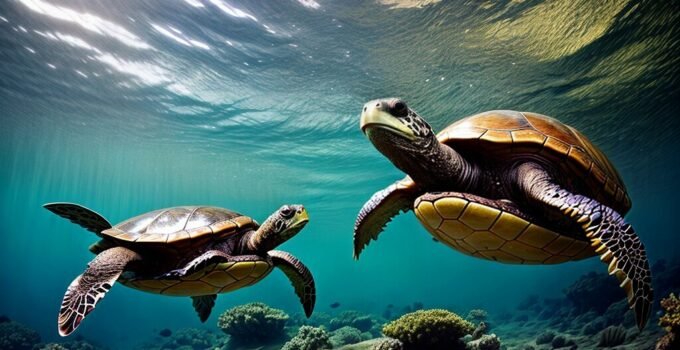
Aquatic turtles are known for their ability to live in water for extended periods of time. These turtles are often found near freshwater sources such as ponds, lakes, and rivers. They are excellent swimmers and have webbed feet that help them move easily through the water.
There are several species of aquatic turtles, including the red-eared slider, painted turtle, and snapping turtle. Each species has its own unique characteristics and requirements.
| Pros of Keeping Aquatic Turtles as Pets | Cons of Keeping Aquatic Turtles as Pets |
|---|---|
|
|
Overall, aquatic turtles can make great pets for those who have the proper setup and dedication to care for them appropriately.
Exploring Terrestrial Turtles
Terrestrial turtles, also known as tortoises, are adapted to living on land and are well-suited for owners who want a pet that is primarily land-based. Terrestrial turtles have sturdy, heavy shells and strong legs that allow them to move across rough terrain.
There are many species of terrestrial turtles, some of which are popular as pets. Examples include the Russian tortoise, the African spurred tortoise, and the box turtle.
| Turtle Species | Size | Unique Characteristics |
|---|---|---|
| Russian tortoise | 6-10 inches | Can survive in hot, arid environments |
| African spurred tortoise | 24-36 inches | One of the largest tortoise species, with a distinctive, spiky shell |
| Box turtle | 4-8 inches | Can fully close their shell for protection, and have a wide range of vibrant colors |
Compared to aquatic turtles, terrestrial turtles have a lower risk of developing respiratory infections, as they do not require a constant source of water and humidity. However, they do need access to clean drinking water and moisture to prevent dehydration.
It’s important to note that terrestrial turtles require a larger habitat than aquatic turtles, as they need space to walk and explore. They also need a varied diet that includes a mix of vegetables and fruits, as well as protein sources like insects and plants.
Habitat Requirements
Creating a suitable habitat is essential for the health and wellbeing of your pet turtle. The environment you provide should mimic the natural habitat of the species you choose, whether aquatic or terrestrial. Here’s what you need to know:
Aquatic Turtle Habitat
Aquatic turtles need a tank that is at least 40 gallons in size, with a basking area and a UVB light. The water should be deep enough for swimming and provide adequate filtration to maintain cleanliness. The temperature of the water should be between 75-80°F, while the basking area should be 10°F warmer than the water. A heater can help regulate the water temperature, and a thermometer should be used to monitor it.
| Requirement | Details |
|---|---|
| Tank Size | Minimum of 40 gallons |
| Water Depth | Deep enough for swimming |
| Water Temperature | 75-80°F |
| Basking Area Temperature | 10°F warmer than water |
Terrestrial Turtle Habitat
Terrestrial turtles require a larger enclosure than aquatic turtles. A glass terrarium or a plastic storage container can be used, with a substrate that allows for digging and burrowing. The enclosure should also have a basking area and UVB lighting. The temperature should be between 70-85°F, with a basking area temperature of 10°F higher than the rest of the enclosure. A thermometer should be used to monitor the temperature.
| Requirement | Details |
|---|---|
| Enclosure Size | Larger than aquatic turtles |
| Substrate | Allows for digging and burrowing |
| Temperature | 70-85°F |
| Basking Area Temperature | 10°F warmer than enclosure |
Regardless of the type of turtle you choose, it’s important to monitor the temperature, humidity, and lighting of their habitat regularly. This will ensure that your pet turtle stays healthy and happy.
Behavior and Activity Levels
Aquatic turtles are highly adapted to living in water. They are excellent swimmers and spend most of their time submerged in their tanks or ponds. Their activity level tends to be more sedentary, and they enjoy basking in the sun or relaxing on rocks or platforms in their habitat.
On the other hand, terrestrial turtles are more active and explorative in their daily behavior. They enjoy climbing, digging, and roaming around their enclosure. They are also more agile and move faster than aquatic turtles.
Differences in Behavior
Some key differences in behavior between aquatic and terrestrial turtles include:
| Aquatic Turtles | Terrestrial Turtles |
|---|---|
| Tend to be more sedentary | Are more active and explorative |
| Enjoy basking in the sun or relaxing on platforms | Prefer hiding in shelters or burrowing in substrate |
| Swim more frequently than walking on land | Move around on land more often than swimming |
Impact of Habitat on Behavior
The behavior of turtles is closely linked to their habitat. Aquatic turtles are better adapted to living in water bodies, and their behavior is influenced by the availability of water. They swim, float, and dive frequently and are generally more relaxed in water. Terrestrial turtles, on the other hand, prefer a dry and sheltered environment. They are more comfortable in hiding places and often seek refuge from the sun or temperature extremes.
Diet and Feeding
Both aquatic and terrestrial turtles require a balanced diet to maintain optimal health. However, their dietary needs differ based on their habitat and species.
Aquatic Turtles:
| Food Type | Examples |
|---|---|
| Plant-Based | Aquatic plants, leafy greens, vegetables |
| Animal-Based | Fish, shrimp, insects, snails |
It is important to provide a varied diet for aquatic turtles to ensure they receive all the necessary nutrients. They are omnivorous and enjoy hunting live prey, but also benefit from a mix of commercial foods, pellets, and fresh produce. Feeding frequency depends on their age and size, but a general guideline is to offer food every other day, with larger meals less frequently.
Terrestrial Turtles:
| Food Type | Examples |
|---|---|
| Plant-Based | Dark leafy greens, vegetables, fruits |
| Animal-Based | Insects, worms, snails, cooked meat |
Terrestrial turtles are primarily herbivorous, with some species supplementing their diet with small amounts of protein. Meals should be provided daily in smaller portions to mimic their natural grazing habits. Commercial diets and supplements can also be fed in moderation, but fresh produce should make up the bulk of their diet.
Handling and Interaction
Interacting with turtles can be a fun and rewarding experience, but it’s essential to handle them properly. Turtles should always be approached cautiously and picked up with care to avoid stressing them. When handling a turtle, it’s crucial to support their body and avoid squeezing or dropping them.
Additionally, it’s important to ensure that the turtle’s environment is safe and free from potential hazards, such as sharp objects or temperature extremes. When allowing interactions with the turtle outside of their enclosure, be sure to supervise them closely to prevent any accidents.
It’s also essential to respect the turtle’s natural behavior and not force them to do anything they don’t want to do. Turtles are known to be timid and may retreat into their shell if they feel threatened or uncomfortable.
When it comes to feeding, it’s best to hand-feed turtles to encourage socialization. This can be done by offering small pieces of food directly to the turtle’s mouth or placing them in a shallow dish for the turtle to grab themselves. It’s important to note that turtles can become aggressive during feeding, so it’s crucial to remain alert and avoid being bitten.
Lifespan and Size
When it comes to lifespan and size, there are significant differences between aquatic and terrestrial turtles.
| Type of Turtle | Average Lifespan | Maximum Size |
|---|---|---|
| Aquatic Turtles | 20-40 years | 5-12 inches |
| Terrestrial Turtles | 40-60 years | 4-8 inches |
Aquatic turtles typically have a shorter lifespan than their terrestrial counterparts. While they can still live 20-40 years with proper care, terrestrial turtles can live up to 60 years.
In terms of size, aquatic turtles tend to be larger than terrestrial turtles. The average size of an adult aquatic turtle is between 5-12 inches, while terrestrial turtles typically grow to be 4-8 inches. However, there are exceptions to this rule, and some terrestrial turtles can grow to be quite large.
It’s important to keep in mind that the size of a turtle can also depend on its species and the environment it lives in. Some aquatic turtles can grow to be quite large, such as the common snapping turtle, which can reach lengths of up to 20 inches. Similarly, some terrestrial turtles, such as the sulcata tortoise, can grow to be over 100 pounds.
When choosing between an aquatic and terrestrial turtle, it’s important to consider the size that the turtle will eventually reach and whether you have the space to accommodate it.
Maintenance and Care
Proper maintenance and care are essential for keeping both aquatic and terrestrial turtles healthy and happy. While the specific requirements may vary depending on the species, here are some general tips to ensure your turtle thrives in its environment:
Tank Setup
For aquatic turtles, the tank should be big enough to accommodate their size and allow for swimming and basking areas. The water level should be deep enough to submerge the turtle (usually 1.5 – 2 times the length of the shell) and be regularly filtered and cleaned. A basking area with a heat lamp should be provided to regulate temperature and provide UV lighting. For terrestrial turtles, a suitable enclosure should mimic their natural habitat with a warm basking area and hiding places. Substrate, such as coconut coir or reptile carpet, should be provided to allow for digging and burrowing.
Feeding and Nutrition
A balanced diet is crucial for maintaining the health of turtles. Commercial turtle pellets, supplemented with fresh vegetables and fruits, should be provided for both aquatic and terrestrial turtles. Aquatic turtles also require live or freeze-dried protein sources such as shrimp or mealworms. Terrestrial turtles may enjoy natural protein sources such as earthworms or beetles. Offer a varied diet to ensure their nutritional needs are met.
Water Quality and Temperature
For aquatic turtles, water quality is vital to their health. The water should be filtered regularly to remove waste and uneaten food. The temperature of the water should be monitored and kept between 75-80°F. For terrestrial turtles, maintaining an appropriate temperature in their enclosure is also essential. A heat source should be provided to keep the environment between 75-90°F.
Handling and Interaction
To prevent stress and injury, turtles should be handled gently and with care. Support the body and avoid grasping by their limbs or tail. Always wash hands thoroughly before and after handling a turtle. Interaction with turtles, such as playing and socializing, can be beneficial for their mental and emotional well-being, but supervision is necessary to prevent accidents.
Choosing the Right Turtle for You
When it comes to choosing between an aquatic or terrestrial turtle, there are several factors to consider to ensure you make the right decision for your lifestyle and preferences.
First and foremost, think about the space you have available for your pet. Aquatic turtles require a larger tank with ample swimming space and basking areas, while terrestrial turtles need more floor space to roam and explore.
Next, think about the level of commitment you are willing to make towards your pet’s care. Aquatic turtles require more maintenance with frequent water changes and monitoring, while terrestrial turtles may have specific temperature and lighting requirements.
Consider your personal preferences for a pet’s behavior and activity level. Aquatic turtles are generally more active swimmers and require a water environment, while terrestrial turtles are slower moving and prefer a dry habitat.
Finally, research the specific species of turtle you are interested in and their care requirements. This will help you make an informed decision and ensure that you are able to provide the necessary care for your pet.
Remember, owning a pet turtle requires responsibility and commitment. By taking the time to carefully consider your options and choosing the right turtle for you, you can ensure a happy and healthy life for your new pet.
Pros and Cons of Aquatic vs. Terrestrial Turtles
As with any pet, there are pros and cons to keeping both aquatic and terrestrial turtles.
| Aquatic Turtles | Terrestrial Turtles |
|---|---|
| Pros: | Pros: |
|
|
| Cons: | Cons: |
|
|
Ultimately, the decision between aquatic and terrestrial turtles depends on personal preferences, available space, and the level of commitment an individual is willing to make to their care. It is important to thoroughly research the specific needs and characteristics of each type of turtle before making a decision.
Conclusion
In conclusion, choosing between an aquatic and terrestrial turtle ultimately depends on personal preferences and lifestyle. Both types of turtles have unique characteristics and requirements that need to be considered before making a decision.
When it comes to habitat requirements, aquatic turtles thrive in water while terrestrial turtles prefer a dry environment. Understanding their behavior and activity levels can help provide a suitable living space and proper feeding regimen.
Caring for a turtle requires commitment and responsibility, including proper maintenance, feeding, and interaction. While turtles are fascinating creatures, their care routines require attention to detail and consistency.
By weighing the pros and cons of aquatic vs. terrestrial turtles, individuals can make an informed decision. Personal preference, space availability, and level of commitment are key factors to consider. Ultimately, choosing the right turtle for an individual’s lifestyle can lead to a rewarding and enjoyable pet ownership experience.
FAQ
Q: What is the difference between aquatic and terrestrial turtles?
A: Aquatic turtles are adapted to living in water and require an aquatic habitat, while terrestrial turtles live primarily on land and need a terrestrial habitat.
Q: What are the advantages of keeping aquatic turtles as pets?
A: Aquatic turtles provide the opportunity to observe their swimming and diving behaviors, and they often have beautiful shell patterns.
Q: What are the disadvantages of keeping aquatic turtles as pets?
A: Aquatic turtles require a larger tank or pond and more equipment for proper filtration and water maintenance.
Q: What are the characteristics of terrestrial turtles?
A: Terrestrial turtles are adapted to living on land, have different shell shapes, and generally require less equipment for their habitats.
Q: What are the advantages of keeping terrestrial turtles as pets?
A: Terrestrial turtles are generally easier to care for and require less maintenance for their habitat.
Q: What are the disadvantages of keeping terrestrial turtles as pets?
A: Terrestrial turtles may be less interactive and have more limited opportunities to observe their natural behaviors compared to aquatic turtles.
Q: What are the habitat requirements for aquatic turtles?
A: Aquatic turtles need a tank or pond with clean, filtered water, a basking area, and proper lighting. Water temperature and quality are crucial for their well-being.
Q: What are the habitat requirements for terrestrial turtles?
A: Terrestrial turtles need a suitable land enclosure with hiding spots, proper substrate, and areas for basking under a heat source.
Q: How do the behavior and activity levels of aquatic turtles differ from terrestrial turtles?
A: Aquatic turtles are more active swimmers and spend more time in the water, while terrestrial turtles are generally slower and spend more time on land.
Q: What is the diet and feeding routine for aquatic turtles?
A: Aquatic turtles require a diet that includes a variety of aquatic plants, insects, small fish, and commercial turtle pellets.
Q: What is the diet and feeding routine for terrestrial turtles?
A: Terrestrial turtles require a diet that includes a mix of leafy greens, vegetables, fruits, and occasional protein sources such as insects or worms.
Q: How should I handle and interact with aquatic turtles?
A: When handling aquatic turtles, it’s important to support their bodies and avoid excessive stress. Controlled interactions outside of their habitat can be enjoyable for both the turtle and the owner.
Q: How should I handle and interact with terrestrial turtles?
A: Terrestrial turtles should be handled gently and with care, supporting their bodies and avoiding excessive stress. Controlled interactions should take place in a safe and secure environment.
Q: What is the average lifespan and size of aquatic turtles?
A: The lifespan of aquatic turtles varies depending on the species, but they can live for several decades. Size also varies, with some species growing up to several feet in length.
Q: What is the average lifespan and size of terrestrial turtles?
A: Terrestrial turtles generally have a longer lifespan than aquatic turtles, often living for several decades. Their size varies depending on the species, with some reaching several inches in length.
Q: What maintenance and care do aquatic turtles require?
A: Aquatic turtles require regular tank cleaning, water quality monitoring, and proper temperature and lighting regulation to ensure their well-being.
Q: What maintenance and care do terrestrial turtles require?
A: Terrestrial turtles require regular enclosure cleaning, temperature regulation, and access to a basking spot and appropriate hiding areas.
Q: How do I choose the right turtle for me?
A: When choosing between aquatic and terrestrial turtles, consider your personal preferences, available space, and the level of commitment you can provide for their care.
Q: What are the pros and cons of keeping aquatic turtles as pets?
A: Pros of keeping aquatic turtles include the opportunity to observe their aquatic behaviors. Cons include the need for a larger tank or pond and more equipment for their care.
Q: What are the pros and cons of keeping terrestrial turtles as pets?
A: Pros of keeping terrestrial turtles include their generally easier care requirements. Cons include limited opportunities to observe natural aquatic behaviors.