When it comes to healthcare expenses, understanding the cost of medical procedures is crucial. If you’re wondering how much a PET scan costs without insurance, we have the answers. A PET scan, or positron emission tomography, is a diagnostic imaging procedure used to detect cancer, brain, and heart conditions. However, the cost of a PET scan can vary depending on several factors.
Without insurance, the cost of a PET scan can range from $1,300 to over $4,600. This price range is influenced by factors such as location, type of facility, procedure cost, and medications required. It’s important to note that Medicare covers PET scans under certain conditions, and many private health insurance plans also provide coverage. However, for those without insurance, it’s essential to be aware of the potential costs and explore options for finding the best price.
One way to find the best price for a PET scan is to shop around. Requesting Good Faith Estimates from multiple healthcare facilities can help you compare costs and make an informed decision. Additionally, considering outpatient facilities instead of hospitals can result in significant cost savings. It’s essential to explore all available options and financial assistance programs, as these can help alleviate the financial burden.
Key Takeaways:
- The cost of a PET scan without insurance can range from $1,300 to over $4,600.
- The actual cost depends on factors such as location, type of facility, and procedure specifics.
- Medicare and many private health insurance plans may provide coverage for PET scans.
- Shopping around and considering outpatient facilities can help save money on PET scans.
- Exploring financial assistance programs can provide additional support for those without insurance.
Understanding the cost of a PET scan without insurance empowers you to make informed healthcare choices. By exploring your options and finding the best price, you can prioritize your health without unnecessary financial burden. To learn more about the cost of PET scans and access additional resources, visit petnotifications.com.
What is a PET Scan and How Does It Work?
A PET scan, short for positron emission tomography, is a nuclear imaging procedure that provides detailed information about metabolic processes in the body. It is commonly used to detect and diagnose various conditions, including cancer, brain disorders, and heart conditions. During a PET scan, a small amount of a radioactive substance called a tracer is injected into the body. This tracer is designed to bind to specific molecules in the body and emit positrons, which are detected by the PET scanner.
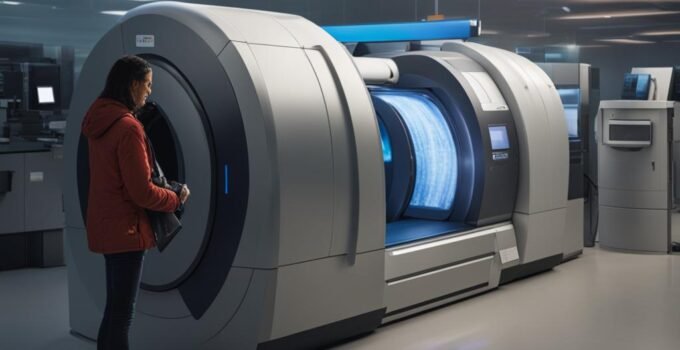
The PET scanner consists of a large ring-shaped machine that contains multiple detectors. These detectors measure the signals emitted by the tracer and convert them into detailed images of the body’s metabolic processes. The images produced by a PET scan can help doctors identify areas of abnormal tissue growth, such as tumors, and assess the functioning of organs and tissues.
One of the main advantages of PET scans is their ability to capture metabolic activity in the body. This means that PET scans can provide valuable information about how organs and tissues are functioning, rather than just showing their physical structure. The images obtained from a PET scan can help doctors make more accurate diagnoses, plan appropriate treatments, and monitor the progress of a disease or treatment over time.

What is a PET Scan Used For?
PET scans are most commonly used in the detection and diagnosis of cancer. They can help determine the stage of cancer, evaluate the effectiveness of treatment, and detect any recurrence of the disease. In addition to cancer, PET scans are also used in the evaluation of brain disorders, such as Alzheimer’s disease and epilepsy, and heart conditions, including coronary artery disease and myocardial infarction.
| Condition | PET Scan Findings |
|---|---|
| Cancer | Areas of increased metabolic activity indicating possible tumor growth |
| Alzheimer’s Disease | Decreased metabolic activity in certain brain regions |
| Coronary Artery Disease | Reduced blood flow to the heart muscle |
Overall, PET scans are a powerful tool in modern medicine, providing valuable insights into the metabolic processes of the body. They play a crucial role in the early detection, diagnosis, and management of various diseases, helping patients receive appropriate treatments for better outcomes.
Factors That Affect the Cost of a PET Scan
When considering the cost of a PET scan, several factors come into play. These factors can influence the overall cost and determine the price range of the procedure. Understanding these factors can help patients make informed decisions and potentially save money.
Insurance Coverage
Whether or not you have insurance is a significant factor in determining the cost of a PET scan. Insurance coverage can affect the amount you will need to pay out of pocket, as well as the negotiated rates with healthcare providers. It is essential to review your insurance policy to understand the extent of coverage for PET scans.
Location
The location where the PET scan is performed can also impact the cost. Prices may vary depending on the region or state, as well as the specific city or town. It’s worth considering traveling to different locations if it is feasible, as costs can significantly differ between areas.
Type of Facility
The type of facility where the PET scan is conducted can also affect the cost. Hospitals and independent diagnostic testing facilities may have different pricing structures. Additionally, outpatient facilities generally have lower costs compared to inpatient hospital settings. Exploring different types of facilities can provide cost-saving opportunities.
| Factors | Impact on Cost |
|---|---|
| Insurance Coverage | Determines out-of-pocket expenses and negotiated rates |
| Location | Price variation based on region or city |
| Type of Facility | Different pricing structures between hospitals and outpatient facilities |
In summary, the cost of a PET scan can be influenced by factors such as insurance coverage, location, and the type of facility where the scan is performed. Patients should review their insurance policies, consider traveling to different locations, and explore different facility options to find the most cost-effective solution. By understanding these factors, individuals can make informed decisions and potentially save on the overall cost of a PET scan.
Average Cost of PET Scans Without Insurance
When it comes to PET scans, the cost can be a significant concern, especially for those without insurance coverage. The average cost of a PET scan without insurance in the United States is approximately $4,637. However, it’s important to note that regional averages can vary, providing potential cost-saving opportunities for patients.
Here are some examples of regional average costs for PET scans without insurance:
| City | Average Cost |
|---|---|
| Atlanta, GA | $2,845 |
| Chicago, IL | $2,652 |
| Dallas, TX | $2,130 |
These prices are based on data from MDsave, a price-shopping tool specifically designed for people without insurance and those with high-deductible health plans. By utilizing such tools and considering different geographical locations, patients can potentially find more affordable options for their PET scans.
Medicare Coverage for PET Scans
Medicare provides coverage for PET scans under certain conditions. If you have original Medicare, Part B will cover a PET scan ordered by your doctor to treat a medical condition. After meeting the Part B deductible, you will be responsible for paying 20% of the Medicare-approved amount if the scan is performed in a doctor’s office or independent diagnostic testing facility. If the scan is done at a hospital as an outpatient, you may also be required to pay a copayment. Medicare Advantage plans may also cover PET scans, but it is important to review your specific plan coverage.
To take advantage of Medicare coverage for PET scans, it’s crucial to ensure that the scan is medically necessary and ordered by a qualified healthcare professional. Additionally, the facility where the scan is performed must be Medicare-approved. This means that they meet certain quality and safety standards set by Medicare. It’s always a good idea to check with your healthcare provider and Medicare to confirm coverage and any out-of-pocket costs you may be responsible for.
For more information on Medicare coverage for PET scans and other services, you can visit the official Medicare website or contact Medicare directly. Understanding your coverage options can help you make informed decisions about your healthcare and manage the costs associated with PET scans.
Other Insurance Coverage for PET Scans
When it comes to getting a PET scan, insurance coverage can play a crucial role in managing the cost. Fortunately, there are various options available for individuals without insurance. Medicaid, the government-funded healthcare program, may cover PET scans in certain states. While not a mandatory benefit, some states do provide coverage for the procedure. It is important to check with your state’s Medicaid office to determine eligibility and coverage details.
Private health insurance plans also typically cover PET scans, although patients may be responsible for meeting deductibles, copays, and coinsurance. It is recommended to review the specific details of your insurance plan to understand what costs may be associated with a PET scan. Tricare, the healthcare program for uniformed service members and their families, also provides coverage for PET scans in certain circumstances.
To explore your coverage options, it is best to reach out to your insurance provider directly. They can provide you with detailed information on what is covered under your plan and any associated costs. Additionally, you can visit our website for more information on insurance coverage for PET scans and other resources to help navigate the healthcare system.
Shopping for PET Scan Prices
When it comes to PET scans, shopping for prices can help patients find the most affordable options. One way to do this is by utilizing hospital price transparency information, which allows patients to compare costs between different facilities. This information can be accessed online or by contacting the hospital directly. By comparing prices, patients can make informed decisions about where to get their PET scan.
Another factor to consider is whether to have the PET scan done at an outpatient or inpatient facility. Outpatient facilities typically have lower costs compared to hospitals, so choosing an outpatient option can help save money. However, it is important to ensure that the chosen facility still meets the necessary standards for quality and safety.
Prior to scheduling a PET scan, patients can also request a Good Faith Estimate (GFE) from healthcare facilities. This estimate provides an overview of the expected charges and fees associated with the procedure. By reviewing multiple GFEs, patients can compare costs and choose the option that best fits their budget.
Financial Assistance Programs
In addition to shopping for prices, patients without insurance or facing financial difficulties can explore financial assistance programs. These programs are designed to help individuals afford necessary medical procedures, including PET scans. Eligibility criteria and available assistance can vary, so it is important to inquire with the healthcare facility or explore resources such as petnotifications.com, a website dedicated to providing information and support regarding PET scans and financial assistance.
Table: Cost Comparison for PET Scans
| Location | Average Cost without Insurance |
|---|---|
| Atlanta, GA | $2,845 |
| Chicago, IL | $2,652 |
| Dallas, TX | $2,130 |
Disclaimer: The above prices are averages and should be used as a general reference. Actual prices may vary depending on individual circumstances and specific healthcare providers.
The Value of PET Scans
PET scans, or positron emission tomography scans, offer distinct advantages over other imaging studies, making them a valuable diagnostic tool in various medical fields. These scans can detect signs of conditions that may not be visible on other types of imaging, providing valuable information about organ and tissue function. PET scans are particularly useful in cancer detection, brain imaging, and assessing heart conditions. By capturing detailed images of biological processes, PET scans offer insights that can guide treatment decisions and help detect diseases at early stages.
Compared to other imaging studies, PET scans provide a unique perspective on how the body functions at a molecular level. This information is crucial for diagnosing and monitoring conditions such as cancer, as it allows healthcare professionals to visualize metabolic activity and identify abnormal tissue. PET scans can help determine the extent of cancer spread, evaluate treatment effectiveness, and guide surgical interventions by precisely locating tumors. This specificity and accuracy make PET scans an invaluable tool in the field of oncology.
When compared to other imaging modalities, such as X-rays, CT scans, or MRI scans, PET scans provide a more comprehensive view of the body’s internal processes. While X-rays and CT scans offer detailed structural images, PET scans go a step further by providing functional information. By visualizing the body’s metabolic activity and identifying areas of abnormal functioning, PET scans can help doctors differentiate between malignant and benign tumors, evaluate brain function, and assess heart conditions. This additional functional information enhances diagnostic accuracy and aids in personalized treatment planning.
Advantages of PET Scans
- Ability to detect early-stage diseases
- Precise localization of tumors and abnormal tissue
- Monitoring treatment effectiveness
- Evaluation of brain and heart function
- Non-invasive procedure
- Minimal side effects
It is important to note that while PET scans offer significant advantages, they are not always the most appropriate imaging modality for every situation. Healthcare professionals will consider various factors when determining the most suitable diagnostic approach, including the specific condition, patient history, and the availability of alternative imaging techniques. However, when used in the appropriate context, PET scans provide invaluable insights into the body’s inner workings, helping to enhance patient care and improve outcomes.
Potential Additional Costs of PET Scans
While considering the cost of a PET scan without insurance, it is important to be aware of the potential additional expenses that may arise during and after the procedure. These costs can include taking time off work for the appointment and the subsequent recovery period. It is advisable to plan accordingly and make arrangements with your employer in advance to minimize any financial burden.
Follow-up appointments are also a crucial part of the PET scan process. After the initial scan, it is common for patients to schedule appointments with their healthcare provider to discuss the results and potential treatment options. These follow-up visits may involve additional costs, such as copays or fees for further tests or consultations. It is recommended to inquire about these potential expenses with your healthcare provider to ensure you are prepared.
If the PET scan reveals a condition that requires treatment, there may be substantial additional costs associated with the recommended course of action. This can include surgeries, radiation therapy, chemotherapy, or other necessary treatments. It is crucial to consult with your healthcare provider to understand the potential treatment costs and explore options for financial assistance or coverage.
| Additional Costs of PET Scans | Examples |
|---|---|
| Time off work | Lost wages from taking time off for the procedure and recovery period. |
| Follow-up appointments | Copays or fees for post-scan consultations and further tests or evaluations. |
| Treatment costs | Expenses related to surgeries, radiation therapy, chemotherapy, or other necessary treatments. |
In summary, PET scans without insurance can involve potential additional costs beyond the initial scan. These may include time off work, follow-up appointments, and treatment expenses. It is important to plan and budget accordingly, exploring potential financial assistance programs or coverage options to alleviate the financial burden associated with these additional costs.
The Bottom Line on PET Scan Costs Without Insurance
For individuals without insurance, the cost of a PET scan can range from approximately $1,300 to over $4,600. However, it’s important to note that the actual cost can vary depending on various factors such as location, type of facility, and procedure specifics. To ensure you get the best price for a PET scan, there are a few strategies you can consider.
PET Scan Cost Comparison: Shopping around and comparing prices from different healthcare facilities is key to finding a more affordable option. Requesting Good Faith Estimates (GFE) from these facilities can give you a better understanding of the expected charges and fees. This allows you to make an informed decision based on your budget.
Saving Money on PET Scans: One way to potentially save money on PET scans is by considering outpatient facilities rather than hospitals. Outpatient facilities often have lower costs compared to hospitals, making them a cost-effective alternative. Additionally, exploring financial assistance programs that may be available to eligible individuals can help mitigate the financial burden.
By taking these steps, you can navigate the costs associated with PET scans without insurance and make informed decisions about your healthcare. To learn more about PET scans or to find a facility near you, visit https://petnotifications.com.
Disclaimer: The information provided here is for informational purposes only and should not be considered medical advice. It is important to consult with a healthcare professional for personalized guidance regarding PET scan costs and insurance coverage.
Conclusion
Understanding PET scan costs without insurance is crucial when making informed healthcare choices. The cost of a PET scan can vary depending on factors such as location, insurance coverage, and the type of facility. By shopping for prices, considering outpatient facilities, and requesting estimates, you can find more affordable options for your PET scan. It is important to explore coverage options and financial assistance programs to alleviate the financial burden.
At our website, we provide resources and information to help you navigate PET scan costs without insurance. We understand the importance of finding the best price and making informed decisions about your healthcare. Visit our website to learn more and access valuable tools to assist you in managing the cost of your PET scan.
By taking proactive steps, such as shopping around and exploring coverage options, you can make a significant difference in your PET scan costs without insurance. We are here to support you in your journey towards affordable and accessible healthcare.
FAQ
How much does a PET scan cost without insurance?
Without insurance, the cost of a PET scan can range from approximately $1,300 to over $4,600.
What factors affect the cost of a PET scan?
Factors that can influence the cost of a PET scan include insurance coverage, location, and the type of facility where the scan is performed.
What is the average cost of a PET scan without insurance?
The average cost of a PET scan without insurance in the United States is approximately $4,637, but regional averages can vary.
Does Medicare cover PET scans?
Medicare provides coverage for PET scans under certain conditions. Medicare Part B covers PET scans ordered by a doctor to treat a medical condition.
Do private health insurance plans cover PET scans?
Many private health insurance plans provide coverage for PET scans. Coverage may vary, so it is important to review your specific plan.
How can I find the best price for a PET scan?
Patients can shop for PET scan prices by utilizing hospital price transparency information, requesting Good Faith Estimates from healthcare facilities, and considering outpatient facilities as a cost-saving option.
What are the advantages of PET scans?
PET scans can detect signs of conditions that may not be visible on other types of imaging. They provide valuable information about organ and tissue function, as well as detect early-stage diseases.
Are there additional costs associated with PET scans?
Additional costs can include taking time off work for the procedure and recovery, as well as follow-up appointments and potential treatment costs if a condition is detected.
How can I save money on a PET scan without insurance?
Patients can shop around for prices, consider outpatient facilities, request Good Faith Estimates, and explore financial assistance programs to save money on PET scans.