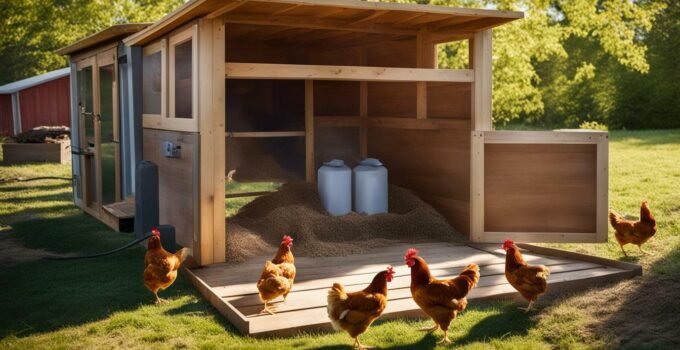
Keeping pet chickens at home can be a rewarding experience, but it requires careful consideration and planning. Before getting chickens, check your local laws and regulations to ensure you can keep them. Make sure you have enough space for them to roam and a suitable coop that provides protection from predators and the elements. It’s important to spend time with your chickens daily, feeding them, cleaning their coop, and providing fresh water. Chickens are omnivores and require a balanced diet of commercial chicken feed, along with fruits, vegetables, and grains. Regular veterinary care is important for their health and well-being, although not all veterinarians may treat chickens. Proper exercise, grooming, and nail trimming are also essential for their care. Be prepared for the ongoing expenses of chicken feed, bedding, and potential veterinary costs. Before acquiring chickens, consider the pros and cons and ensure that you can commit to their care.
Key Takeaways:
- Check local laws and regulations before keeping chickens.
- Provide enough space for your chickens to roam and a secure coop.
- Feed them a balanced diet of commercial chicken feed, fruits, vegetables, and grains.
- Ensure they have access to clean and fresh water.
- Schedule regular veterinary care and find a veterinarian who treats chickens.
Understanding Legal Requirements and Space Considerations
Before getting chickens, it’s crucial to understand the legal requirements and ensure you have enough space to accommodate them. Keeping chickens as pets may be subject to local laws and regulations, so it’s important to check with your local authorities to ensure you are in compliance. Certain areas may have restrictions on the number of chickens you can keep or require specific permits.
In addition to legal considerations, providing adequate living space is essential for the health and well-being of your chickens. The recommended space per bird in a coop enclosure is typically a minimum of 4 square feet per bird. This allows them to move freely, stretch their wings, and engage in natural behaviors. An overcrowded coop can lead to stress, disease, and aggressive behavior among the flock.
When designing your chicken coop, it’s important to prioritize their safety and comfort. Ensure that the enclosure is secure and provides protection from predators such as foxes, raccoons, and birds of prey. Use sturdy fencing and consider adding wire mesh to prevent digging or climbing. Adequate ventilation is also crucial to maintain a healthy environment inside the coop.
| Legal Considerations | Space Requirements |
|---|---|
|
|
“Keeping chickens as pets may be subject to local laws and regulations, so it’s important to check with your local authorities to ensure you are in compliance.”
Regulations Observed
When keeping chickens at home, it’s crucial to respect and follow the regulations in your area. By observing these regulations, you not only ensure the well-being of your chickens but also maintain a positive relationship with your community. Failure to comply with local laws can result in fines or the removal of your chickens.
It’s also important to note that regulations regarding chicken keeping may vary depending on where you live. Some areas may have specific requirements for coop size, placement, or distance from neighboring properties. By familiarizing yourself with these regulations and incorporating them into your chicken care plans, you can avoid unnecessary legal issues and enjoy a harmonious relationship with both your chickens and your neighbors.
Conclusion
Understanding the legal requirements and space considerations before getting chickens is vital for their well-being and your peace of mind. By complying with local regulations and providing sufficient space for your chickens to thrive, you can create a safe and comfortable environment for them. Remember to check with your local authorities, invest in a secure and spacious coop, and always prioritize the health and happiness of your feathered friends.
Creating a Safe and Comfortable Chicken Coop
A well-maintained chicken coop is essential to keep your feathered pets safe and comfortable. It provides them with a secure space to live and protects them from predators and the elements. To ensure the well-being of your chickens, proper coop maintenance is crucial.
Firstly, make sure the coop has enough space for your chickens to move around comfortably. A general rule of thumb is to allow at least 4 square feet per bird. This ensures they have enough room to lay, roost, and move without feeling cramped. Additionally, providing a nesting box for every 3-4 hens allows them to lay their eggs in a private and secure space.
Raised roosting bars are important for chickens to sleep comfortably. Placing them higher up in the coop mimics their natural instinct to perch, helping them feel safe and secure during rest. It’s also essential to keep the coop clean by regularly removing the litter and replacing it with clean wood shavings. This helps discourage mites and prevents the buildup of odors and flies.
| Dust Baths | Dust baths are an important natural behavior for chickens. They help keep the birds clean and control parasites. Provide a designated area in the coop for them to dust bathe, using sand, soil, and wood ash. |
|---|
Quote: “A clean and well-maintained coop not only ensures the comfort of your chickens but also prevents the spread of diseases and keeps them healthy.” – Dr. Jane Johnson, Avian Veterinarian
Regular Maintenance Checklist:
- Clean the coop and nesting boxes at least once a week to maintain hygiene.
- Check for any damage to the coop structure, such as holes or loose wires, and repair them promptly.
- Inspect the coop for signs of pests or infestations, and take appropriate measures to eliminate them.
- Monitor the temperature and ventilation in the coop to ensure proper airflow and prevent overheating or drafts.
By following these maintenance practices, you can create a safe and comfortable living environment for your pet chickens. Remember, their well-being is directly linked to the conditions in which they live, so investing time and effort into proper coop maintenance is essential.
Feeding and Nutrition for Pet Chickens
Proper feeding and nutrition are vital to keep your chickens healthy and thriving. As omnivores, chickens require a balanced diet that includes commercial chicken feed, as well as fruits, vegetables, and grains. Commercial chicken feed is formulated to provide essential nutrients like protein, vitamins, and minerals that chickens need for optimal health.
When choosing chicken feed, opt for a nutritionally balanced layer feed specifically designed for laying hens. Layer feed has higher levels of calcium to support eggshell production. Calcium sources such as crushed oyster shells or finely ground eggshells can also be provided separately to supplement their diet. Remember to offer treats in moderation, as excessive amounts can lead to nutritional imbalances.
Offer fresh, clean water to your chickens at all times. Water should be changed routinely to prevent bacterial contamination and maintain hydration. Avoid using dirty containers as they can harbor harmful bacteria. Clean the water dishes regularly to ensure your chickens have access to clean water throughout the day.
| Food Type | Amount | Frequency |
|---|---|---|
| Commercial Layer Feed | Free choice | Daily |
| Fruits and Vegetables | Small amounts | A few times a week |
| Grains (corn, wheat, etc.) | Small amounts | A few times a week |
| Treats (mealworms, seeds, etc.) | Small amounts | Occasional |
By providing a balanced diet, clean water, and appropriate treats, you can ensure that your pet chickens receive the nutrition they need to stay healthy and happy. Remember to monitor their food consumption and adjust portions accordingly to prevent overeating or wastage.
Hydration and Cleanliness
Maintaining proper hydration and cleanliness is crucial for the health of your pet chickens. Clean and fresh water should be provided to chickens on a regular basis. It is important to routinely change the water to ensure it remains free from bacteria and contaminants. By doing so, you can help prevent the spread of diseases and promote the overall well-being of your feathered friends.
In addition to providing clean water, it is essential to keep their feeding dishes and water containers clean. Dirty dishes and containers can harbor bacteria that can be harmful to your chickens. Regular cleaning will help prevent bacterial growth and maintain a hygienic environment for your pets.
To maintain cleanliness in the chicken coop, it is recommended to use wood shavings as litter. Wood shavings absorb moisture, which helps control odors and reduces the risk of flies. It is also important to regularly clean the coop and remove waste and droppings. By practicing good sanitation, you can minimize the risk of disease transmission and ensure a healthier environment for your chickens.
Overall, proper hydration and cleanliness are essential aspects of caring for your pet chickens. By providing clean water, regularly cleaning their dishes and coop, and practicing good sanitation, you can help keep your feathered friends healthy and happy.
| Key Points |
|---|
| Provide clean and fresh water to your chickens regularly. |
| Routinely change the water to prevent bacterial contamination. |
| Clean feeding dishes and water containers to eliminate bacteria. |
| Use wood shavings as litter in the coop to absorb moisture and control odors. |
| Regularly clean the coop and remove waste and droppings to maintain hygiene. |
Veterinary Care and Health Maintenance
Regular veterinary care and disease prevention measures are essential to maintain the health of your pet chickens. While not all veterinarians may treat chickens, it is important to find a professional who specializes in avian medicine or has experience with poultry. A knowledgeable veterinarian can provide routine check-ups, vaccinations, and advice on common chicken health issues.
Observation is key when it comes to detecting any signs of illness or disease in your chickens. Keep a close eye on their behavior, appetite, and overall appearance. Look out for any changes in droppings, abnormal breathing, or lethargy. These could be indications of underlying health problems. Promptly report any concerns to your veterinarian for proper diagnosis and treatment.
Prevention is always better than cure. Implementing disease prevention measures can significantly reduce the risk of health issues in your flock. Practice good biosecurity by keeping your coop clean and free of pests. Quarantine new chickens before introducing them to the rest of the flock to prevent the spread of diseases. Regularly disinfect feeders, waterers, and any equipment used in the coop. Minimize stress on chickens, as it weakens their immune system and makes them more susceptible to diseases.
| Disease Prevention Tips |
|---|
| Provide a clean and well-ventilated coop to prevent respiratory diseases. |
| Keep feeders and waterers clean to avoid bacterial contamination. |
| Practice good hygiene by washing your hands before and after handling chickens. |
| Limit exposure to wild birds and rodents, which can carry diseases. |
Remember, prevention is key when it comes to keeping your chickens healthy. Regular veterinary care and disease prevention practices will help ensure your flock stays happy and disease-free.
Exercise and Grooming for Chickens
Providing regular exercise and maintaining cleanliness are essential aspects of caring for pet chickens. Free-ranging, under controlled conditions, allows chickens to exercise their natural instincts, forage for insects, and have a change of scenery. However, it is important to consider the risks involved, such as predators and theft, when allowing chickens to roam freely. Ensure that local regulations regarding free-ranging are observed to protect the health and safety of your chickens.
In addition to exercise, routine cleaning is crucial for maintaining the health and well-being of your chickens. Regularly clean the coop to remove waste, droppings, odors, and potential fly risks. This not only improves sanitation but also prevents the buildup of harmful bacteria and reduces the risk of diseases. Proper waste management is vital in ensuring the overall health of your flock.
Grooming is another important aspect of chicken care. Regularly inspect your chickens for any signs of parasites or diseases and take timely action. Trim their nails to prevent overgrowth, which can lead to discomfort or injury. Additionally, provide dust baths for your chickens as it helps them keep their feathers clean and controls external parasites. By incorporating regular exercise and grooming into your chicken care routine, you can ensure that your feathered friends lead a healthy and happy life.
Table: Guidelines for Exercise and Grooming
| Activity | Frequency |
|---|---|
| Free-ranging | Under controlled conditions, daily or as permitted by local regulations |
| Coop cleaning | Weekly |
| Nail trimming | Every 4-6 weeks |
| Dust baths | As needed, provide access to dry soil or sand |
In summary, exercise and grooming play a vital role in the care of pet chickens. Free-ranging, when allowed within the boundaries of local regulations, provides chickens with the opportunity to exercise and engage in natural behaviors. Routine cleaning of the coop ensures a clean and hygienic environment, preventing the buildup of waste and reducing the risk of disease. Regular grooming, including nail trimming and dust baths, helps keep chickens healthy and free from parasites. By prioritizing exercise and grooming, you can ensure that your pet chickens lead a happy and fulfilling life.
Introducing New Chickens and Social Order
Careful planning and consideration are necessary when introducing new chickens to maintain a harmonious social order. Chickens are naturally hierarchical and establish a pecking order within their flock. If new chickens are introduced without proper preparation, it can lead to problems and persistent issues.
One important step to take is quarantining new chickens before introducing them to the existing flock. This period of isolation allows you to observe their health and behavior, preventing the spread of potential diseases or parasites. It also gives the new chickens time to adjust to their new surroundings and become familiar with their new coop.
When it’s time to integrate the new chickens, it’s best to do so gradually. Start by introducing them to the existing flock in a controlled and supervised environment. It’s normal for some pecking and establishing dominance to occur, but if the aggression becomes excessive or violent, it may be necessary to separate the chickens and try a different introduction method.
Properly preparing and planning for the introduction of new chickens is crucial to prevent potential predicaments. By following these steps preemptively, you can increase the chances of a successful integration and maintain a harmonious social order within your chicken flock.
Understanding the Behavioral Dynamics of Chickens
“Chickens have a natural instinct to establish a social order, known as a pecking order. This hierarchy helps maintain order and reduces conflict within the flock. It is important to understand and respect this natural behavior when introducing new chickens to an existing flock.”
Each chicken has its own personality and temperament, which can influence their position in the pecking order. When adding new chickens, they will initially be at the bottom of the hierarchy and may experience some pecking and bullying from the established chickens.
Providing enough space within the coop and run is essential to minimize aggression and allow the new chickens to find their place. Multiple feeding and watering stations can reduce competition and prevent food-related conflicts. Offering plenty of hiding spots and perches can also help the new chickens escape from aggression and establish themselves.
| Helpful Tips for Introducing New Chickens: |
|---|
| 1. Quarantine new chickens for at least two weeks to monitor their health. |
| 2. Introduce new chickens gradually, starting with supervised interactions. |
| 3. Provide multiple feeding and watering stations to reduce competition. |
| 4. Offer hiding spots and perches to allow the new chickens to escape aggression. |
| 5. Monitor the flock closely during the integration process and intervene if necessary. |
The Pros and Cons of Keeping Pet Chickens
Before acquiring chickens, it’s important to weigh the pros and cons to determine if pet chickens are the right choice for you. Here are some of the advantages and disadvantages to consider:
Pros:
- Fresh Eggs: One of the main benefits of keeping chickens is the supply of fresh, organic eggs right from your backyard. You can enjoy the satisfaction of knowing exactly where your eggs come from and how the chickens are cared for.
- Sustainable Living: By raising your own chickens, you can reduce your carbon footprint and promote sustainable living. Chickens eat kitchen scraps, which reduces food waste, and their manure can be used as organic fertilizer for your garden.
- Insect Control: Chickens are natural pest control agents. They love to eat bugs, ticks, and even small rodents, helping to keep your yard and garden free from pests without the need for harmful chemicals.
- Teaching Opportunities: If you have children, keeping pet chickens can be a great way to teach them about responsibility, animal care, and the circle of life. It provides hands-on learning experiences and can foster a love for nature and animals.
Cons:
- Ongoing Expenses: While chickens can save money on eggs in the long run, there are ongoing expenses to consider. These include purchasing chicken feed, providing bedding, and maintaining their coop. Additionally, if your chickens require veterinary care, it can add to the expense.
- Time and Effort: Keeping chickens requires a commitment of time and effort. They need daily care, including feeding, cleaning, and collecting eggs. You also need to consider who will care for them if you go on vacation or need to be away from home for an extended period.
- Potential Veterinary Costs: Although chickens are generally hardy animals, accidents and illnesses can occur. It’s important to have access to a veterinarian who is knowledgeable about chicken care. However, not all veterinarians may treat chickens, so it’s crucial to have a plan in case of emergencies.
- Noise and Odor: Chickens can be noisy, especially when they lay eggs or feel threatened. Additionally, their coop can produce odors if not properly cleaned and maintained. Make sure to check local ordinances regarding noise and odor restrictions before keeping chickens.
| Pros | Cons |
|---|---|
| Fresh eggs | Ongoing expenses |
| Sustainable living | Time and effort |
| Insect control | Potential veterinary costs |
| Teaching opportunities | Noise and odor |
As with any pet, keeping chickens requires careful consideration and commitment. Before making the decision to bring chickens into your home, carefully weigh the pros and cons, taking into account your lifestyle, resources, and local regulations. With proper planning and dedication, keeping pet chickens can be a rewarding and enjoyable experience.
Committing to the Care of Pet Chickens
Owning pet chickens requires a commitment to their care and well-being. These delightful creatures need daily attention and care to ensure they lead healthy and happy lives. Whether you’re a beginner or an experienced chicken keeper, it’s important to understand the responsibilities that come with owning pet chickens.
One of the key aspects of commitment is providing a suitable living space for your chickens. This includes having a well-designed and secure coop that protects them from predators and harsh weather conditions. Regularly cleaning the coop and providing fresh bedding are vital for maintaining their health and hygiene. Moreover, chickens require daily feeding and access to fresh water to stay nourished and hydrated. It’s important to have a routine in place to ensure these needs are met consistently.
In addition to their physical needs, chickens also need mental stimulation and social interaction. They enjoy foraging, scratching, and stretching their wings. Giving them access to a secure outdoor space or supervising their free-ranging time can help them thrive. Spending time with your chickens, observing their behavior, and providing gentle grooming and nail trimming can strengthen the bond between you and your feathered friends.
Commitment to the care of pet chickens also involves being prepared for the ongoing expenses that come with their ownership. This includes the cost of quality chicken feed, bedding materials, and potential veterinary care. Before bringing chickens into your home, it’s essential to consider the financial responsibilities involved and ensure you have the means to provide for their needs.
| Commitment to the Care of Pet Chickens: |
|---|
| Providing a suitable living space and ensuring their safety and comfort. |
| Feeding them a balanced diet and providing access to fresh water. |
| Spending quality time with them, providing mental stimulation and social interaction. |
| Being financially prepared for the ongoing expenses of chicken ownership. |
By understanding the commitment required and being prepared for the responsibilities, you can provide a loving and caring home for your pet chickens. The joy and companionship they bring make it all worthwhile, and with proper care and attention, your chickens can live long and happy lives.
Conclusion
Congratulations on completing this guide on how to care for pet chickens at home. By following the tips and advice provided, you are well-equipped to provide a safe and nurturing environment for your chickens.
Remember to consider legal requirements and space considerations when setting up your chicken coop. Creating a safe and comfortable coop is essential for the well-being of your flock.
Proper feeding and nutrition, along with providing clean and fresh water, are crucial for keeping your chickens healthy. Regular veterinary care and disease prevention measures will help maintain their overall well-being.
Finally, don’t forget the importance of exercise, grooming, and maintaining a harmonious social order among your chickens. By committing to the care of your chickens, you can enjoy the many benefits of having them as pets.
FAQ
What legal requirements do I need to consider before keeping pet chickens?
Before getting chickens, it’s important to check your local laws and regulations to ensure you are allowed to keep them as pets.
How much space do chickens need in their coop?
Chickens require enough space to roam comfortably. A general guideline is to provide at least 4 square feet per bird inside the coop and 10 square feet per bird in an outdoor run.
How should I maintain a safe and comfortable chicken coop?
To ensure the safety and comfort of your chickens, regularly clean the coop, provide a nesting box for laying eggs, and install roosting bars for them to sleep on. Use clean litter, such as wood shavings, and discourage dust baths to prevent mites.
What should I feed my pet chickens?
Chickens require a balanced diet of commercial chicken feed that provides the necessary nutrients. In addition to feed, you can offer them fruits, vegetables, and grains in moderation.
How often should I change the water for my chickens?
Freshwater should be provided to chickens daily, and it’s important to change it routinely to prevent bacteria build-up. Clean their water dishes regularly to ensure their health.
Do chickens require veterinary care?
Chickens can benefit from regular veterinary care, although not all veterinarians may treat them. Observing your chickens for signs of illness and practicing disease prevention is important for their health and well-being.
How should I exercise and groom my chickens?
Free-ranging is a good form of exercise for chickens, but it should be done with caution to prevent risks from predators and theft. Routine cleaning of their living area is essential for sanitation and health.
How do I introduce new chickens to the flock?
It’s important to quarantine new chickens before introducing them to the existing flock. Proper planning and preparation can help in assimilating them into the social order without causing problems.
What are the pros and cons of keeping pet chickens?
Keeping pet chickens can be rewarding, but it comes with ongoing expenses for feed, bedding, and potential veterinary costs. It’s important to consider the pros and cons before committing to their care.
Is it a big commitment to care for pet chickens?
Caring for pet chickens requires daily attention to their needs, including feeding, cleaning their coop, and providing fresh water. It is a commitment that should not be taken lightly.